
Ever wondered what happens to your data if your VPN suddenly disconnects? This isn’t just a technical worry – it’s a real-life risk, and it’s where the mighty “Kill Switch” steps in to save the day.
What is a VPN Kill Switch?
Think of a VPN like a super-secure, encrypted tunnel connecting your device to the internet. All your data travels safely through this tunnel, hidden from prying eyes (like your internet service provider, hackers, or anyone else snooping around).
But what happens if that tunnel suddenly collapses? Perhaps your internet connection drops, the VPN server gets overloaded, or something else goes wrong. This is where your VPN disconnects, leaving your devices vulnerable.
A VPN kill switch is like a superhero standing at the entrance of that tunnel. The moment the VPN connection starts to fail or drops, the kill switch instantaneously cuts off your entire internet access. It acts as a digital emergency brake.
Why Does a VPN Kill Switch Matter?
Imagine you’re sending confidential information or just browsing the web, believing you’re safe inside your encrypted VPN tunnel. If that tunnel disappears and the kill switch doesn’t exist, your internet connection automatically switches back to its normal, unencrypted state (using your ISP’s connection).
Here’s the problem:
- Your Real IP Address is Exposed: Your unique internet identifier, which usually reveals your approximate location and other details, is now visible to everyone.
- Your Data May Lose Encryption: Any data you’re currently sending or receiving may no longer be encrypted, depending on the sites and platforms used.
- Your Online Activity Can Be Tracked: Your internet service provider can now see exactly which websites you’re visiting and what you’re doing online.
This is a data leak. It undermines the entire purpose of using a VPN in the first place.
A kill switch prevents this entire nightmare. By immediately stopping all internet traffic the second the VPN drops, it ensures that your sensitive information never gets sent over an unencrypted connection. It’s your ultimate insurance policy.
Why You Need a Kill Switch: Real-Life Examples
Strict Security Needs: If you’re a journalist, activist, or just someone who prioritizes data privacy, a kill switch isn’t optional – it’s mandatory. It’s the only way to ensure your safety and anonymity.
Public Wi-Fi: Using a VPN on public Wi-Fi is essential to protect your data. But public networks can be unstable. If your VPN disconnects and you don’t have a kill switch, you’re instantly exposed to any hacker on that same network.
Downloading or Streaming: If you’re downloading a file or streaming something through a VPN and the connection drops, you don’t want your real IP address to be suddenly revealed. A kill switch stops this.
Key Takeaway
A VPN without a kill switch is a dangerous gamble. Your data privacy depends on a continuous, encrypted connection. A kill switch provides the essential fail-safe, the last line of defense, that protects you when the unexpected happens. When choosing a VPN, this should be one of the very first features you check for and enable.
Looking for a VPN with an Integrated Kill Switch?
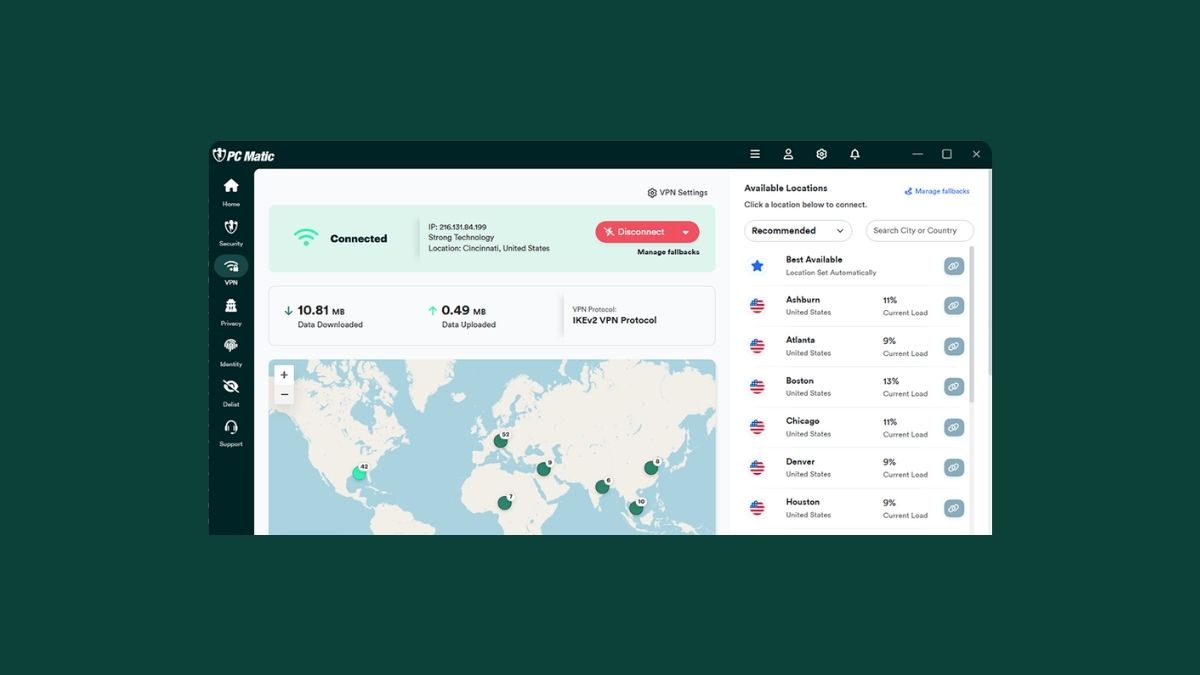
PC Matic’s VPN solution understands the critical importance of a kill switch for user privacy and security. Our VPN client includes a powerful, reliable kill switch that automatically cuts your internet connection if your VPN ever drops.
This feature ensures that your real IP address and sensitive data are never exposed, even for a fraction of a second. With PC Matic VPN, you can enjoy peace of mind knowing that your primary defense against data leaks is always active, providing you with true, unwavering online security.